"Draft a week of social posts from your updates"
Every week an agent turns your updates into a batch of drafted social posts, ready for you to review, edit, and publish, so the blank calendar fills itself while you stay in control of what goes out.
The hardest part of posting consistently is the blank week: seven empty slots and no time to fill them. This recipe hands the first draft to an agent. Every week it takes your updates, what you shipped, what you learned, the notes you jotted down, and turns them into a batch of drafted posts: a week's worth of content, written in your voice, ready for you to skim, tweak, and publish. You still decide what goes out and when. The agent just removes the staring-at-a-blank-page part, so a consistent presence stops depending on finding an hour you never find.
Who this is for
Founders, marketers, and solo operators who know they should post regularly but keep running out of runway to write. If your social calendar is a graveyard of good intentions, or you batch-write on Sunday night and dread it, this turns "draft a week of posts" into a standing job that lands a ready-to-edit batch in front of you every week. It fits a personal brand, a product account, or a small marketing team that wants a first draft to react to instead of a blank document.
What you'll set up
An agent that writes drafts, a source of updates for it to draw from, and a schedule that runs it every week. The agent reads your updates, your recent shipping notes, a changelog, a knowledge doc, or a channel where the team posts wins, and drafts a set of posts from them. It writes the drafts to a file or a table so you can review the whole week at once. This recipe drafts; it does not publish on its own. You stay the editor and the publish button.
Build it
- Give the agent something to draw from. Point it at your updates: upload recent notes or a changelog as knowledge, or let it read a chat channel where the team posts what shipped. The richer the source, the less generic the drafts.
- Create an agent for the job, for example one named
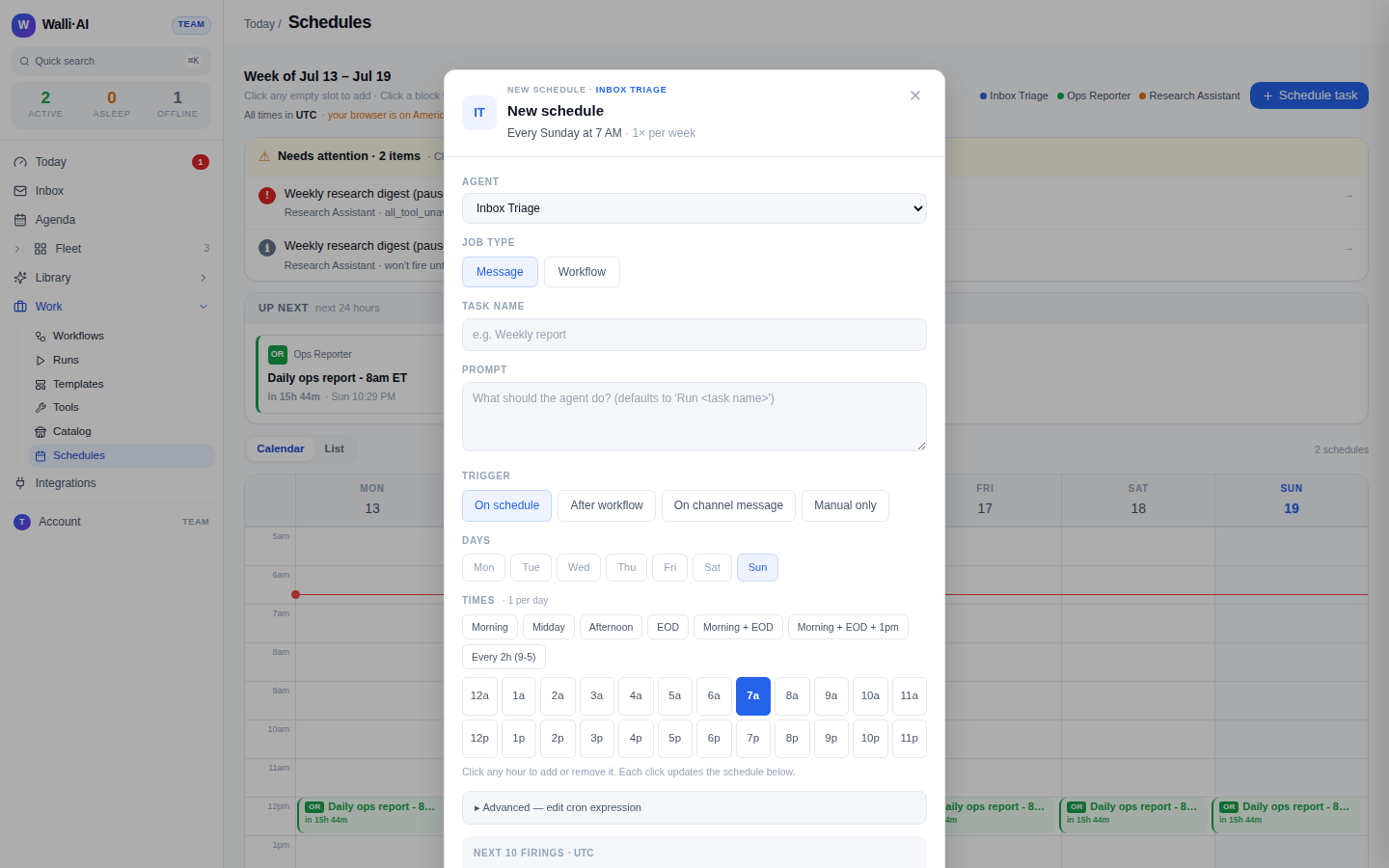
Social Drafter, and teach it your voice: the tone, the length, the format (hook plus body plus call to action), what you never say, and the platforms you post to. Tell it to draft distinct posts rather than rephrasing one idea seven ways, and to flag when it does not have enough material for a strong post rather than padding. - Add a schedule that runs the agent once a week, in your timezone: pick the day and hour it should deliver the batch.
- In the schedule's instruction, say what you want: for example "From this week's updates, draft five posts for the week ahead, one per weekday, in my voice, and save them to a file I can review. Note which update each post came from so I can check it."
- Read the drafted batch, edit the ones you like, drop the ones you do not, and publish them yourself. Tighten the agent's voice instructions based on what you kept, and next week's batch gets closer.
What you get
A batch of drafted posts, delivered on your cadence, written from your real updates rather than invented from nothing. Each draft ties back to something you actually shipped or said, so the week reads like you and not like filler. The drafts land in a file or table where you can review the whole week in one pass, edit in place, and keep only what earns a slot. The blank calendar is gone; what is left is the part only you should do, deciding what is worth saying.
Nothing goes out without you. The agent produces drafts and stops there; publishing is a separate, deliberate step you take, so a rough idea or an off-brand line never reaches your audience by accident. That review gate is the point: you get the speed of a first draft with none of the risk of an agent speaking for you unsupervised.
Make it yours
- Match the platform. Ask for short punchy drafts for one network and longer threaded drafts for another, and have the agent label each draft with where it is meant to go.
- Draft from a report. Point the agent at a saved report or your metrics and have it draft "here is what the numbers say" posts, so your updates write themselves from the dashboard.
- Keep a running backlog. Save drafts to a table with a status column instead of a file, so you build a reviewable content pipeline you can pull from any week.
- Publish the ones you approve. If you connect an X account or a Facebook Page as an integration, an agent can publish the specific posts you have already reviewed and approved. This stays a deliberate, human-approved step: the drafting schedule never publishes on its own. See connect an integration for the connection.
What it costs
This recipe is one agent that runs once a week and writes a handful of drafts: small, bounded work on a light cadence. Run it on Walli-AI's managed Spark models and the work is metered against your plan's included AI budget, which you can watch fill in real time; run it on your own provider key and it bills to your provider instead. A weekly batch is a predictable, modest load, so the real cost driver is how many agents and seats you want, not this one schedule. For how metering works and which plan fits, see what it costs and choosing a plan.