A research desk and writer, working as a team
One agent researches the web and hands its findings to a second agent that writes the piece, so you get a drafted deliverable from a single request instead of doing both jobs yourself.
Good writing on a topic you do not already know cold is really two jobs: someone digs up what is true, then someone turns it into a clean piece. This recipe splits those jobs across two agents that work as a team in your own workspace. One is a research desk that searches and reads the web; it hands its findings to a second agent that drafts the piece. You make one request and get back a written deliverable grounded in real sources, instead of doing the digging and the writing yourself.
Who this is for
Marketers, founders, content leads, and anyone who needs researched writing on a regular basis: a market brief turned into a blog post, a set of sources turned into a memo, a topic turned into a first draft. It fits any job where the quality depends on both getting the facts right and writing them well, and where doing both in one head is the bottleneck. If you keep researching a thing and then separately writing it up, this makes the two steps one flow.
What you'll set up
Two agents in your own workspace and a handoff between them. The first agent has web search and fetch tools and does the research; the second is a writer that takes the findings and drafts the piece. You connect them one of two ways: a pipeline where step one is the research agent and step two is the writer, or a within-workspace agent-to-agent call where the research agent finishes and hands off to the writer as a teammate. Either way the handoff stays inside your own workspace.
Build it
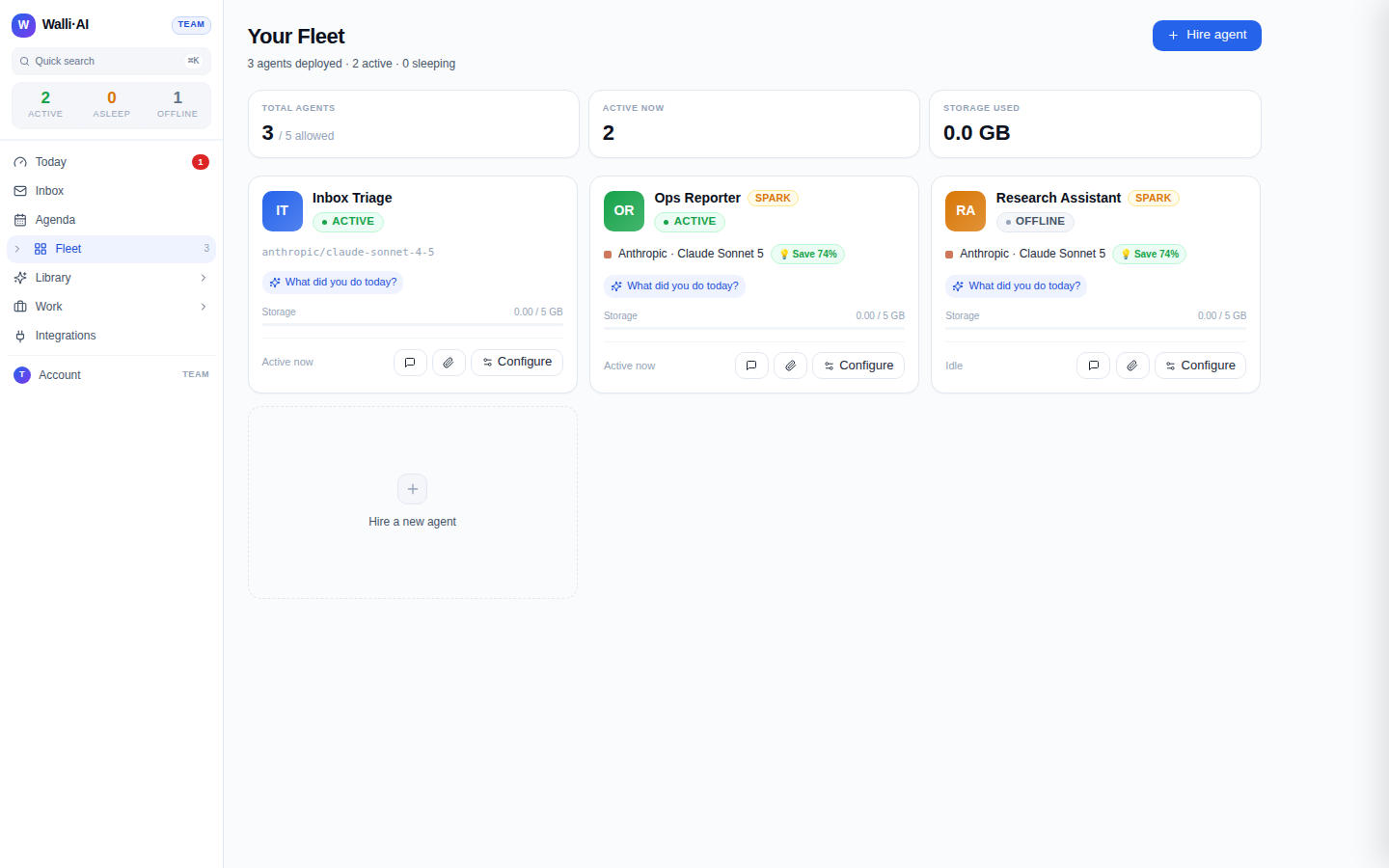
- Create an agent for the research desk, for example one named
Research Desk, and instruct it to search and read the web on the topic, then return well-organized findings with source links. Its web search and fetch tools need no connection; they read the public web only. - Create a second agent for the writer, for example
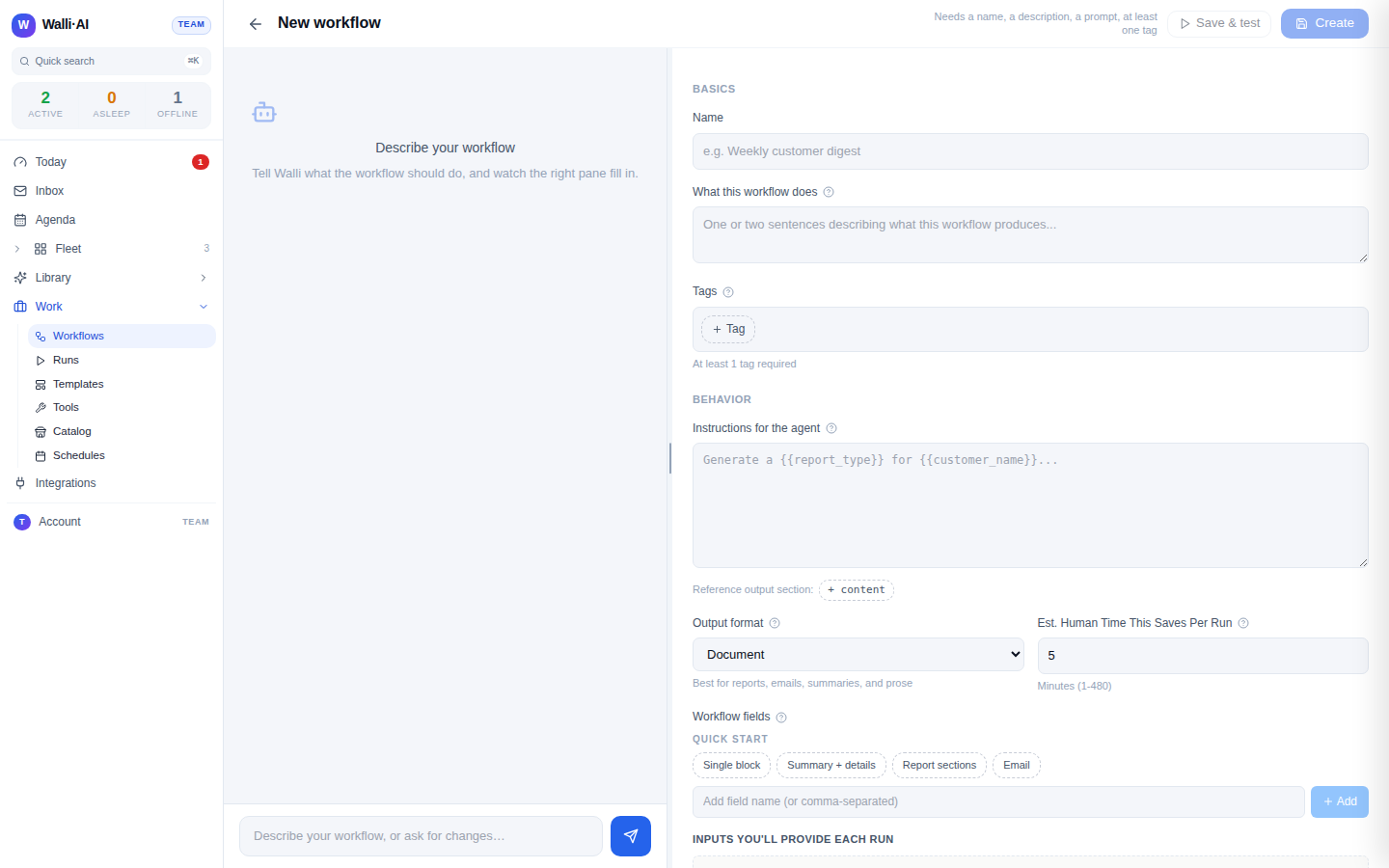
Staff Writer, and instruct it on voice, structure, and length: how you want the finished piece to read. - Wire the handoff. The clean way to make it reusable is a workflow: build the writer's job as a workflow with Structured data as the handoff format and turn on Let other agents in your fleet use this, so the research agent can call the writer as a tool. For a one-off, use a pipeline instead: in an agent's chat, click Plan it and describe the whole job ("research X, then draft a 600-word post"), and the planner lays it out as a research step feeding a writing step.
- Run it. Kick off the pipeline (or ask the research agent to research the topic and hand the findings to the writer), and each step's output feeds the next: the desk's findings become the writer's input.
- Read the draft, and if you want a human gate before anything is delivered, turn on Approval required on the writer's workflow so a run pauses for your review.
What you get
A drafted piece that came from real research: the writer worked from the desk's findings, and the desk's findings came from pages it actually searched and read, with the source links carried through so you can check any claim against its origin. You made one request and two specialists did their halves, which is both faster than doing it yourself and better than asking a single agent to research and write in one undifferentiated pass. Each agent's run is recorded, so you can see what the desk found and what the writer did with it.
One boundary matters and is worth stating: the handoff is within your own workspace only. Agent-to-agent calls are tenant-isolated: an agent can invoke another agent that lives in your workspace, and a cross-workspace call is refused outright. This is teamwork among your own agents, not collaboration across companies. And keep the two capabilities distinct: the research desk reaches the public web through its search and fetch tools, which is a different thing from the code sandbox, which has no internet at all.
Make it yours
- A single reusable workflow. Save the whole desk-then-writer flow as a workflow you attach to a schedule, so a fresh researched draft arrives on a cadence.
- A stricter gate. Turn on approval so every draft waits for a human before it is delivered to a channel or email, when the writing goes somewhere public.
- A third specialist. Add an editor agent as a final step that tightens the writer's draft against a checklist, so the chain is research, draft, edit.
- A different deliverable. Point the writer at a memo, an email, or a web page instead of a post, by changing its instructions and the output format.
What it costs
This recipe runs two agents per job, and the research step does real web reading, so it uses more AI per run than a single quick task; it also runs only when you ask for a piece. If the agents run on Walli-AI's managed Spark models, their work is metered against your plan's included AI budget, which you can watch fill in real time. Run them on your own provider key instead and their usage bills to your provider and never touches that budget. The plan you need depends on how many agents and seats you want. See what it costs and choosing a plan.