A weekly market and competitor research digest
An agent that searches the web every week, reads what it finds, and delivers a decision-ready digest of what moved in your market, saved to your Library.
Once a week you should know what moved in your market: what competitors shipped, what got funded, what the press covered, what changed in the landscape you compete in. Doing that scan by hand is the kind of important-but-not-urgent work that slips for months. This recipe builds an agent that runs every week, searches and reads the web on the topics you name, and delivers a short, decision-ready digest to your Library: the single most important development up top, then the supporting items with links.
Who this is for
Founders, marketers, and product leads who need to stay current on a market but do not have a standing hour to trawl it. It fits anyone tracking a defined set of competitors, keywords, or themes: a product category, a set of named rivals, a regulatory area, a technology trend. If "keep an eye on the space" is on your list and keeps sliding, this makes it happen on a clock.
What you'll set up
One agent, run by a weekly schedule, that searches the web, reads the pages it finds, and writes a digest file. The agent has web search and fetch tools; the schedule fires it on the cadence you set; the deliverable lands in your Library as a saved file you can open, and optionally posts to a channel.
Build it
- Create an agent for the job, for example one named
Research Desk, and in its instructions name exactly what to track: the competitors, the topics, the keywords, and what a good digest looks like (lead with the most important item, keep it short, always include the source link). - The agent's web tools let it search the open web and fetch the pages it finds. No connection or key is needed for these; they are available to the agent for reading public sources. It cannot reach private or internal addresses, only the public web.
- Write the agent's digest brief. A good one: "Once a week, search for the latest news, launches, and funding for these competitors and topics. Read the most relevant results. Write a digest that leads with the single most important development, then lists the supporting items each with a one-line summary and a link. Save it as a file named this-week-in-market."
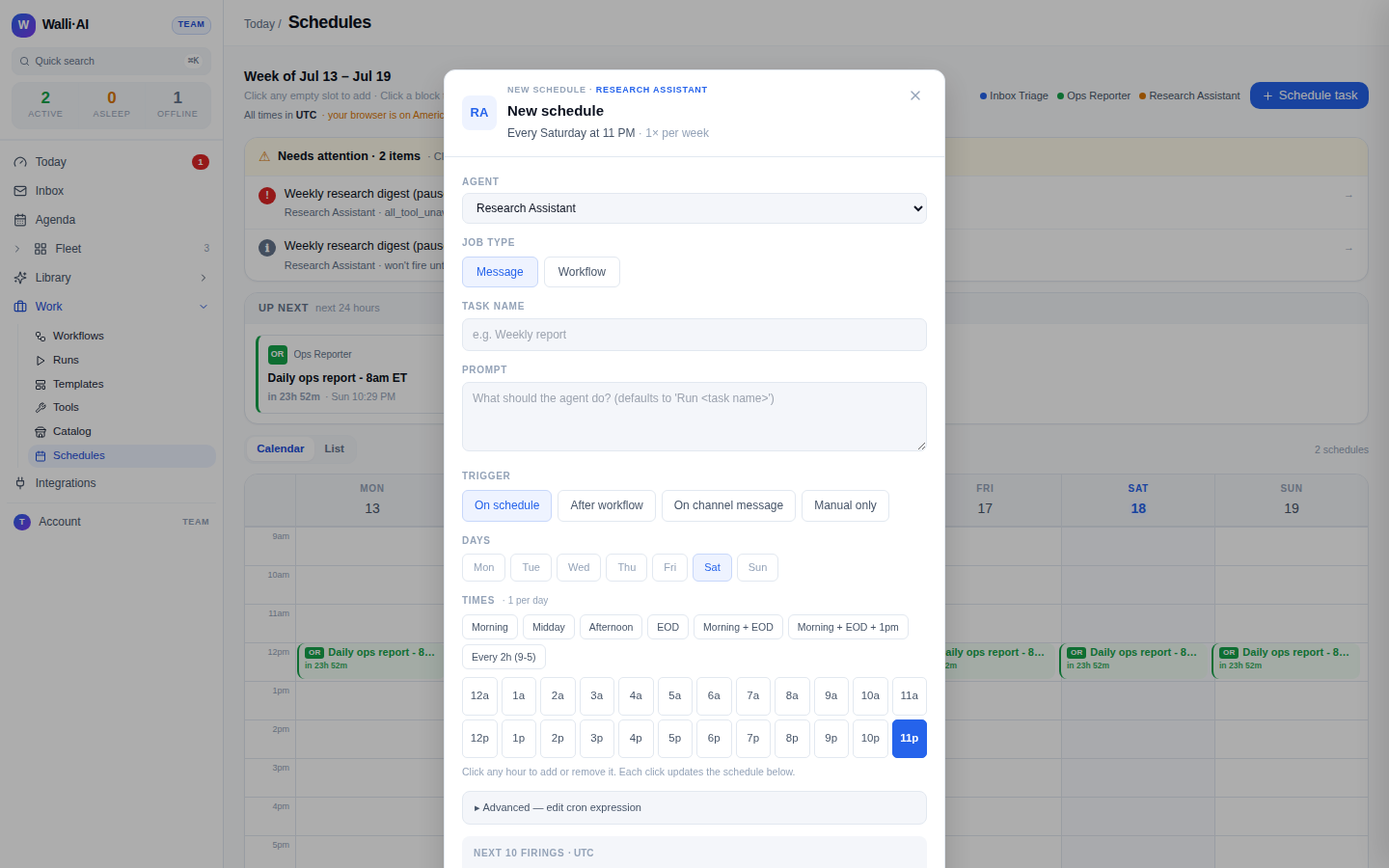
- Point a schedule at the agent with a weekly cron (say Monday 9am in your timezone), and confirm the next-firings preview before enabling it.
- Choose where the digest goes: it saves to your Library by default, and you can also have the run post the summary to a chat channel so the team sees it Monday morning.
What you get
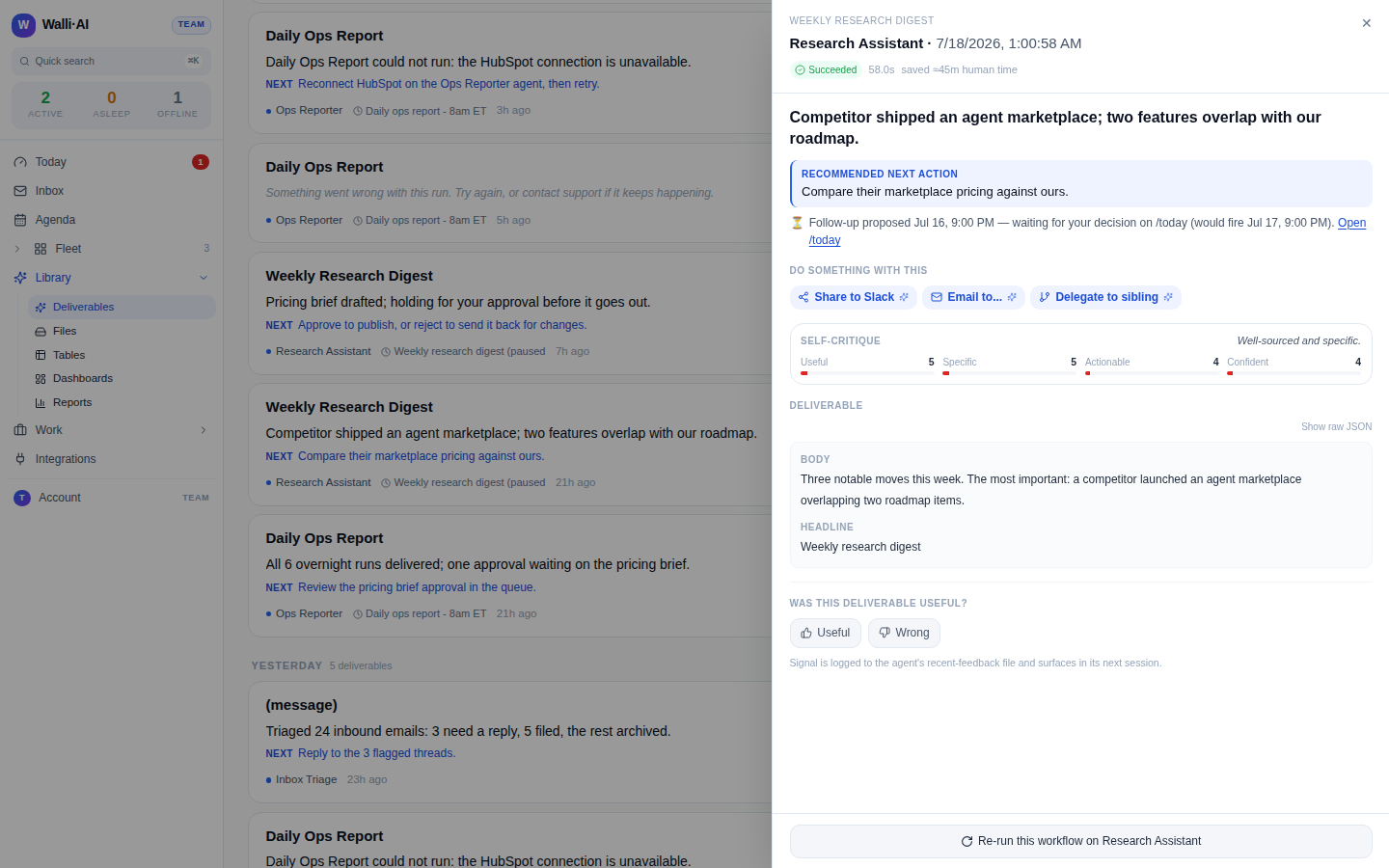
Every week a digest file appears in your Library: the most important development first, then the supporting items, each with a source link you can click through to verify. The agent did the searching and reading, so you get the decisions worth making, not a wall of raw results. Open it Monday morning, skim the headline, and dig into whatever matters. If you wired the channel delivery, the same summary is waiting in your team's chat.
Two honest limits are worth naming. The agent researches from the public web: it can search and read public pages, but it cannot reach your internal systems or private services, by design. And it summarizes what it actually read, with links back to the sources, so you can always check a claim against its origin rather than taking the digest on faith.
Make it yours
- A different cadence. Daily for a fast-moving launch window, or monthly for a slower market, by editing the schedule's cron.
- A narrower beat. Split into two agents (one for competitors, one for the broader category) each with its own tighter brief, so each digest stays focused.
- Deliver to a channel or a doc. Beyond the Library file, post the summary to Slack or Discord for the team, or keep a running file the agent appends to each week.
- Feed the next step. Route the digest into a workflow that turns the top item into a follow-up task, so the research does not just inform, it kicks off action.
What it costs
This recipe is one agent that runs once a week and does real reading, so it uses more AI per run than a quick triage but runs far less often. If it runs on Walli-AI's managed Spark models, that work is metered against your plan's included AI budget, which you can watch fill in real time; the weekly cadence keeps it modest. Run it on your own provider key instead and its usage bills to your provider and never touches that budget. The plan you need depends on how many agents and seats you want. See what it costs and choosing a plan.