Agents and the job model
Every other AI product hands you a blank box and wishes you luck. Walli-AI asks a different question: what is the job, and who is doing it? Everything below follows from answering that first.
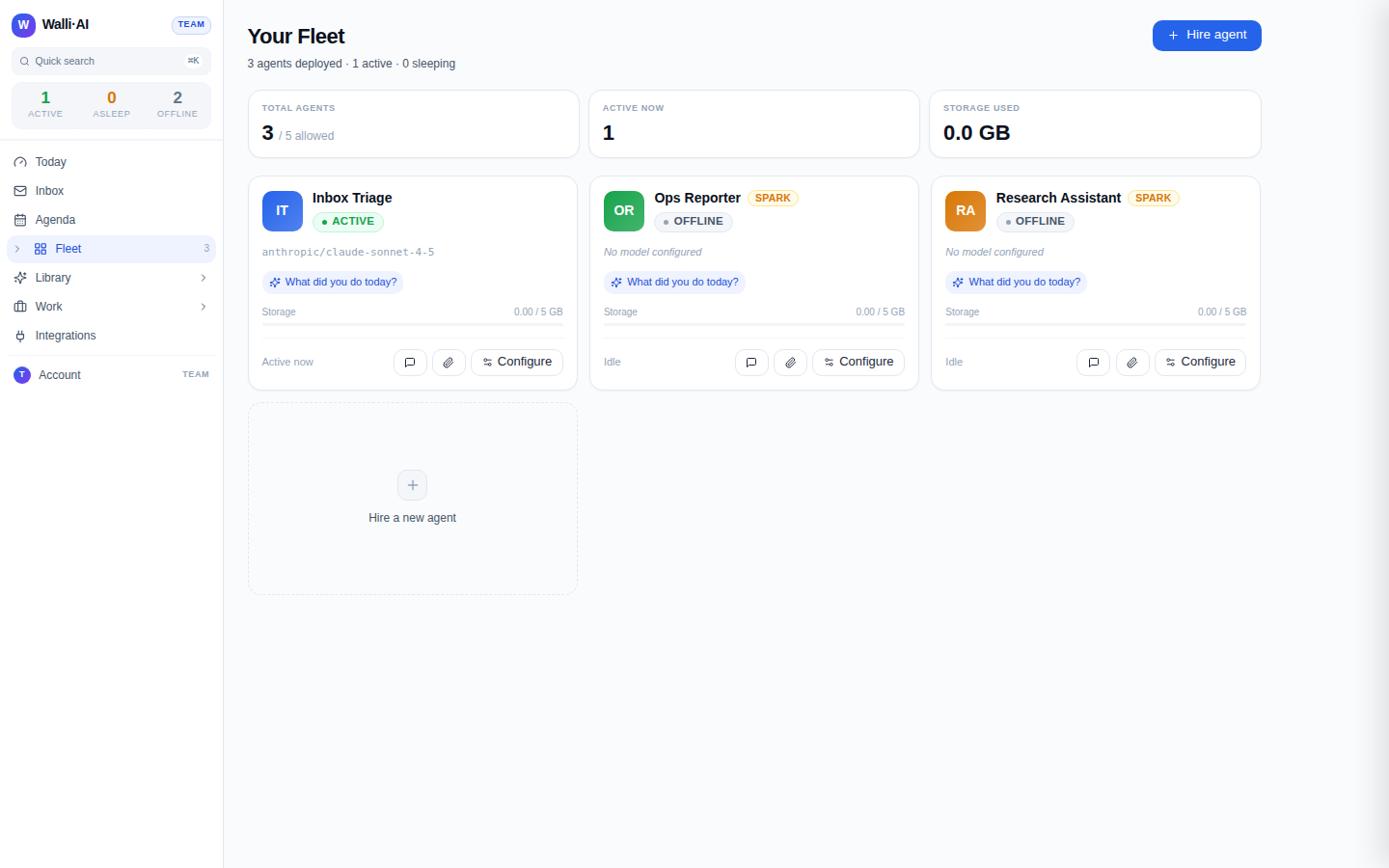
An agent here is closer to a hire than to a chatbot. It arrives knowing a role, it keeps memory of what it has done for you, it holds its own credentials to your systems, and it works on a schedule whether or not you are watching. The setup is deliberately shaped like onboarding a person rather than configuring software.
Pick a role, or describe the job.
The catalog has 16 occupations, and each one is a real job description rather than a label. It carries a mission, the responsibilities it owns, the approach it takes, a voice, the skills it should have, and the guardrails it works inside. Choosing one is the whole of setup for most people.
If your job is not one of those, describe it in your own words instead. The platform interviews you the way a recruiter would, then writes the occupation itself: mission, responsibilities, voice, and the tools it will need. You end up with a bespoke role that reads like the catalog ones because it was built the same way.
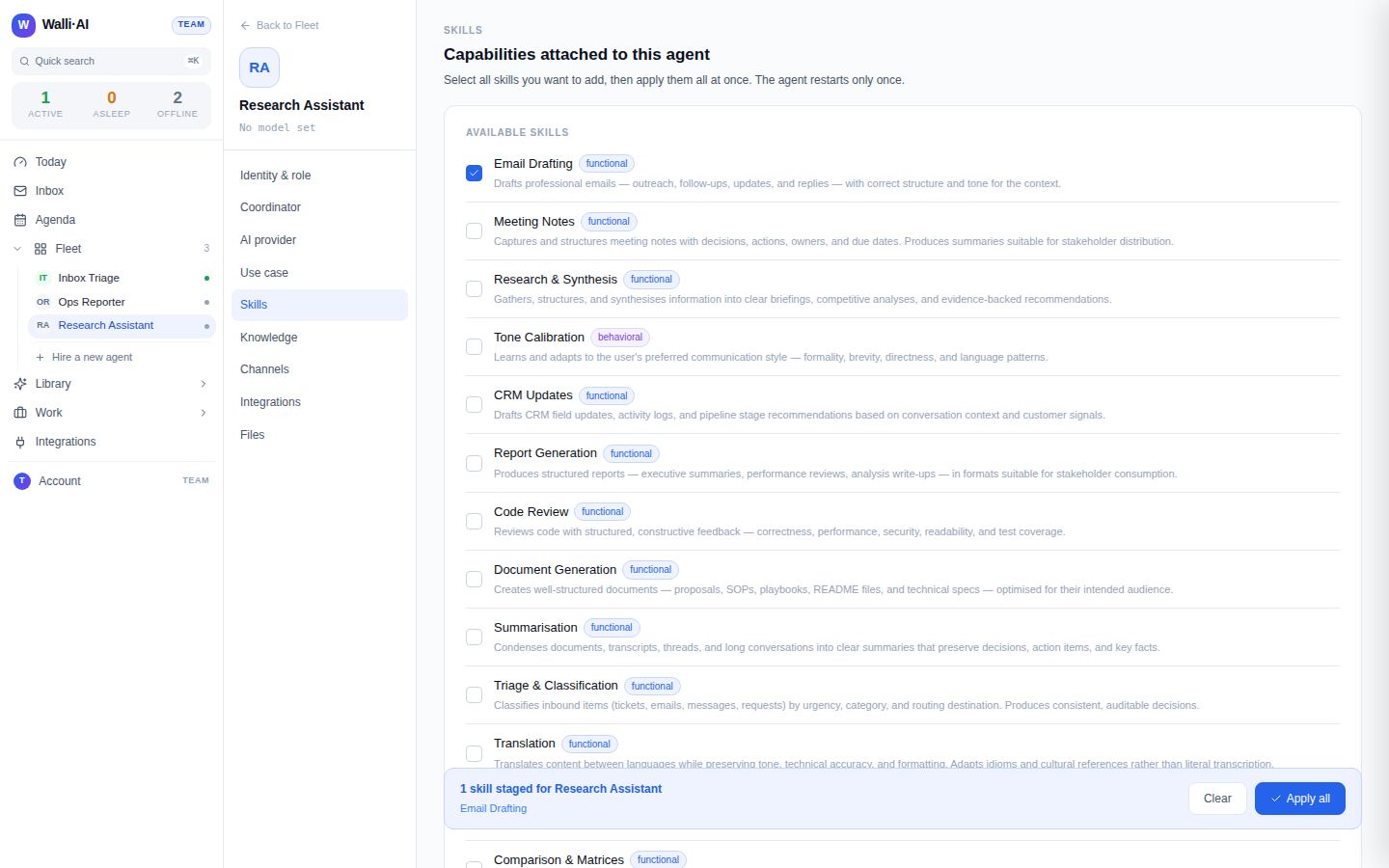
Skills are training, not prompting.
A skill is a capability or behaviour module you attach to an agent. Some add ability, like researching a prospect, reviewing a contract for missing protections, or writing an email sequence. Others shape how it works, like brevity, tone, formality, or citing its sources. You attach them the way you would send a hire on a course, and you can remove one that is not helping.
Not locked to one AI vendor.
Each agent runs on a model you choose, from 36 in the managed catalog across 8 providers, and you can switch at any time without rebuilding anything. You can also point an agent at your own provider key, in which case that provider bills you directly and the agent uses none of your included AI budget.
This matters more than it sounds. It means a research agent can run on a frontier model while a triage agent runs on something small and cheap, and it means you are never one vendor price change away from a problem.
It remembers, and you can read exactly what.
Agents recall relevant past conversations and their own recent work, so you are not re-explaining your business every morning. Past context is pulled in only when it is actually relevant to what you asked, which keeps answers focused and keeps the cost down.
You can open an agent and read the list of what it remembers, and delete any of it. There is no hidden profile being built about you or your customers.
Replay, and teamwork.
Every session is replayable
You can open any past session and read it turn by turn, including which tools were called and what came back. Nothing an agent did is unavailable to you afterwards.
Agents hand work to each other
One agent can call another as a tool, strictly inside your own workspace. A research agent gathers findings and hands them to a writer, and you get a finished piece from a single request.
Once you have more than one agent, something has to look across them. The Coordinator triages signals across your whole fleet, handles the routine items within whatever authority you have granted it, and reports what it dealt with. Where it is not yet allowed to act on its own, it proposes instead and waits. Everything it does on its own initiative can be undone.
Now make it run without you.
You have an agent. The next question is what makes it start working when you are not there.
How work gets scheduledAll areas