Channels
An agent nobody can reach is a dashboard. These are the places your team already talks, and an agent belongs in them on the same terms as anyone else.
Walli-AI agents can be reached in Slack, Discord and Telegram. In every one of them, both ways of talking to a colleague work: mention the agent in a channel where the whole team can see the answer, or send it a direct message when the question is yours alone. Neither is a second-class path bolted on later.
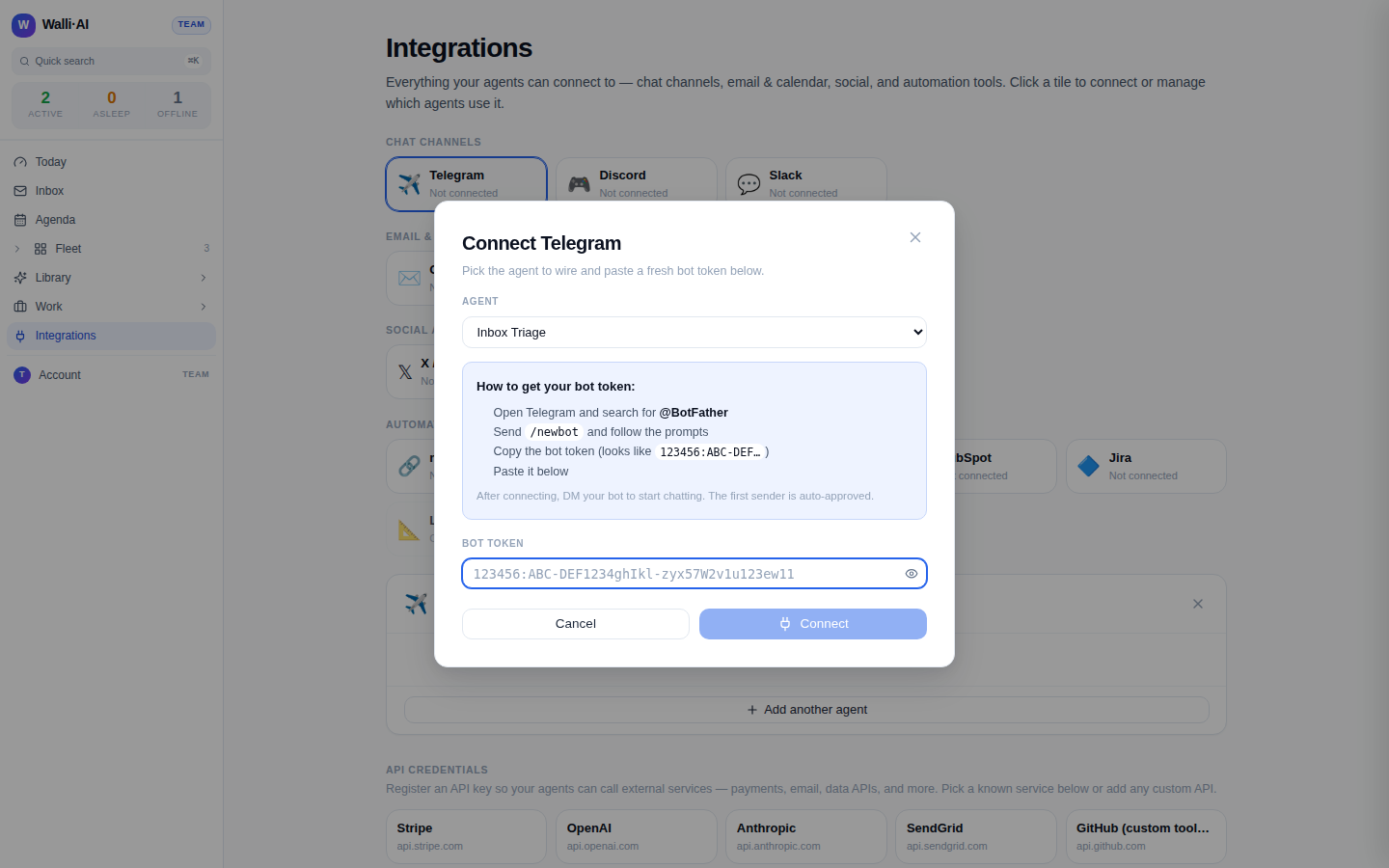
The agent is in the room.
Answers where the question was asked
A question in a team channel gets answered in that channel, so the answer is visible to everyone who needed it rather than trapped in one person's window.
Work handed over in conversation
You can give an agent a job in a direct message the way you would message a colleague, and pick the result up later from your Library.
Noise filtered before it costs you
Inbound messages are triaged first. Spam, social chatter and pure notifications are stopped before a model ever sees them.
It knows who it is talking to
The agent resolves the real identity of the person speaking rather than guessing, so it cannot confidently address the wrong person.
Not a notification channel. A working one.
Briefs, meeting preps, approval requests and finished deliverables arrive by email, and the important ones can be acted on from the email itself. An approval link is signed, single use and expiring, so clearing a decision from your phone takes one tap and does not require signing in.
On the reading side, an agent connected to your mailbox triages what arrived and drafts replies into your drafts folder. It cannot send them. That is not a setting.
Delivery to where it needs to go.
A completed report or draft can be delivered to email, posted into Slack or Discord, handed to Mailchimp as a draft campaign, or published to a blog. Anything that reaches an audience outside your workspace goes as a draft or through an approval, never straight out.
But can you trust what comes back?
An agent that can reach your team and your customers raises an obvious question. Here is the answer.
Why you can trust the outputAll areas